
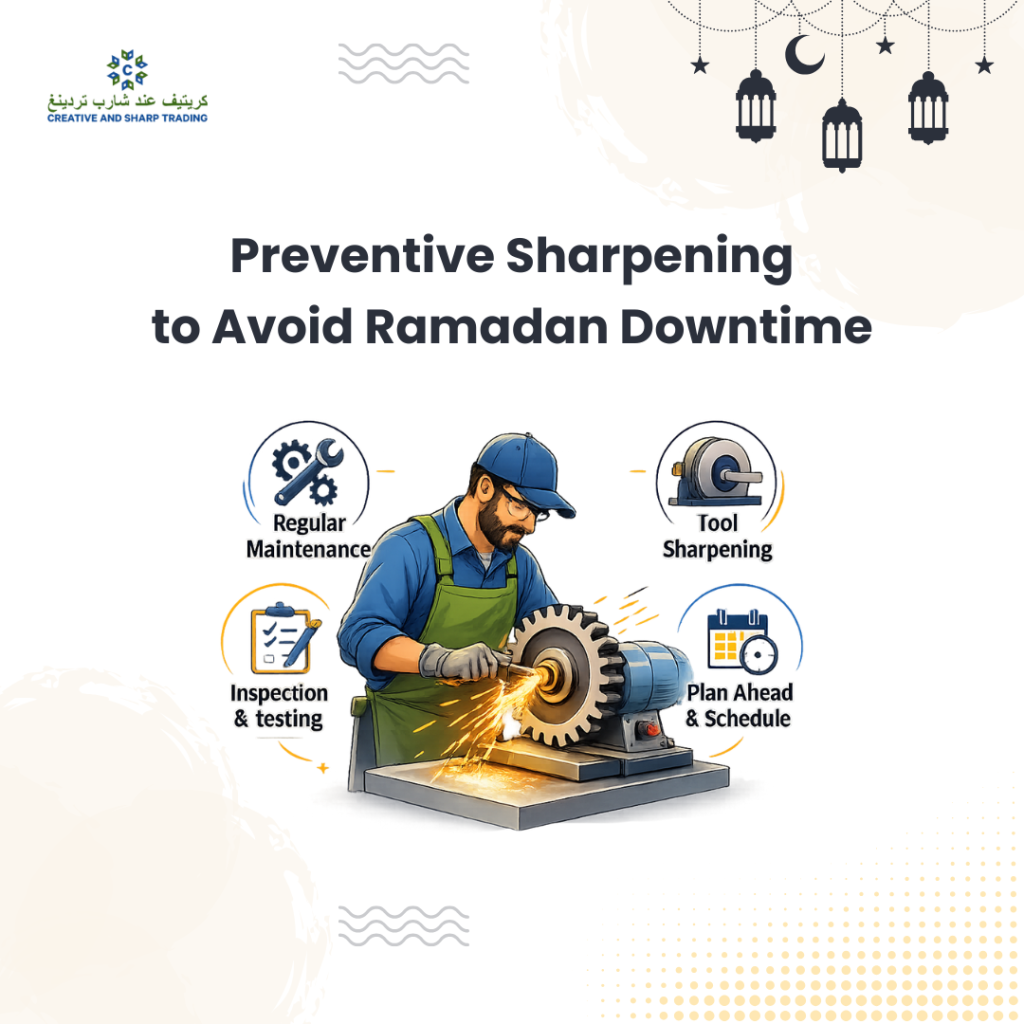
Why Tool Readiness Becomes a Business-Critical Discipline During the Holy Month?
Ramadan brings a unique operational rhythm. Work hours shift, demand patterns spike before iftar, staffing levels fluctuate, and tolerance for delays drops sharply. Across service-driven and craft-based industries, sharp tools are not a convenience—they are a continuity requirement. Preventive sharpening ensures operations remain smooth, safe, and predictable when there is little room for disruption.
This blog explores how preventive sharpening directly protects productivity, quality, and safety across multiple industries during Ramadan, and why waiting for tools to fail is a costly mistake.
The Hidden Cost of Dull Tools During Ramadan
Downtime during Ramadan rarely comes from dramatic failures. It comes from small inefficiencies that compound:
- Slower task execution due to increased effort
- Inconsistent output quality
- Higher fatigue during fasting hours
- Increased risk of accidents and rework
- Missed service windows during peak demand times
Preventive sharpening eliminates these risks before they surface, preserving operational flow when businesses can least afford interruptions.
Preventive Sharpening as Operational Risk Management
Preventive sharpening is not reactive maintenance. It is a planned intervention strategy that aligns tool performance with business demand cycles.
Key characteristics include:
- Scheduled sharpening before peak periods
- Tool condition audits instead of failure-based repair
- Standardized sharpness levels for consistent output
- Reduced emergency repairs during critical days
During Ramadan, this approach shifts sharpening from a maintenance task to a resilience practice.
Beauty & Grooming Industry
Precision, Speed, and Client Trust During Peak Festive Demand
Salons, barber shops, and grooming studios experience increased footfall before iftar and Eid preparations. Clippers, scissors, razors, and trimmers must perform flawlessly.
Impact of dull tools:
- Uneven cuts and dissatisfied clients
- Longer service times leading to queue build-up
- Increased hand strain for professionals during fasting
Preventive sharpening benefits:
- Faster, cleaner cuts with less effort
- Consistent service quality across all staff
- Reduced fatigue and injury risk
For grooming professionals, sharp tools protect both reputation and revenue during Ramadan.
Hospitality & Culinary Industry
Kitchen Efficiency When Time and Tolerance Are Limited
Restaurants, caterers, and cloud kitchens operate under extreme time pressure during suhoor and iftar windows. Knives, slicers, cleavers, and prep tools must support high-volume production.
Impact of dull tools:
- Slower food preparation and missed service times
- Poor presentation and inconsistent portioning
- Higher accident risk due to forced cutting
Preventive sharpening benefits:
- Faster prep with cleaner cuts
- Improved kitchen safety and control
- Consistent taste and visual quality
In Ramadan kitchens, sharp tools are the difference between controlled service and chaotic rush.
Healthcare & Veterinary Services
Accuracy and Safety Under Physical and Emotional Strain
Medical, dental, and veterinary professionals continue essential services during Ramadan, often with reduced staffing or adjusted schedules. Surgical tools, scalpels, forceps, and precision instruments must remain reliable.
Impact of dull instruments:
- Reduced procedural accuracy
- Longer intervention times
- Increased patient and practitioner risk
Preventive sharpening benefits:
- Precision maintained without excessive force
- Reduced procedure duration
- Enhanced safety and compliance
In healthcare and veterinary settings, preventive sharpening directly supports patient outcomes and professional accountability.
Tailoring & Fashion Industry
Meeting Festive Deadlines Without Compromising Craft
Tailors and fashion workshops face intense pressure during Ramadan and before Eid. Scissors, shears, rotary cutters, and pattern tools are in constant use.
Impact of dull tools:
- Fabric fraying and inaccurate cuts
- Increased material waste
- Slower production and missed delivery dates
Preventive sharpening benefits:
- Clean, accurate cuts across all fabric types
- Faster workflow with less rework
- Consistent craftsmanship under tight timelines
For fashion professionals, sharp tools protect both deadlines and design integrity.
Gardening & Floristry
Freshness, Aesthetics, and Seasonal Demand
Florists and gardeners see higher demand for decorations, gifting, and event setups during Ramadan and Eid. Pruners, shears, knives, and cutters must maintain precision.
Impact of dull tools:
- Damaged stems reducing flower lifespan
- Slower preparation for arrangements
- Increased hand fatigue during repetitive tasks
Preventive sharpening benefits:
- Clean cuts that preserve freshness
- Faster assembly of arrangements
- Improved ergonomics for extended work periods
Sharp tools ensure visual quality and freshness when presentation matters most.
Woodwork & Industrial Operations
Productivity and Safety in Reduced-Hour Environments
Workshops, carpentry units, and light manufacturing facilities often adjust shifts during Ramadan. Cutting tools, chisels, blades, and machine knives must perform efficiently within limited time windows.
Impact of dull tools:
- Poor finish quality and dimensional errors
- Increased machine load and wear
- Higher risk of operator injury
Preventive sharpening benefits:
- Cleaner cuts and consistent output
- Reduced equipment stress
- Safer, smoother operations
In industrial settings, preventive sharpening directly supports output targets and workforce safety.
Aligning Sharpening Schedules With Ramadan Planning
Effective preventive sharpening requires alignment with operational planning:
- Conduct tool audits 2–3 weeks before Ramadan
- Prioritize high-usage and safety-critical tools
- Establish sharpening benchmarks by task type
- Maintain backup tools to avoid single points of failure
This proactive approach eliminates last-minute disruptions when external service availability may also be limited.
Preventive Sharpening as a Culture, Not a Task
Organizations that avoid Ramadan downtime do not rely on emergency fixes. They embed preventive sharpening into their operational mindset.
This culture:
- Treats tools as productivity assets
- Recognizes maintenance as risk prevention
- Values preparedness over reaction
- Protects both people and performance
Conclusion: Sharp Tools, Steady Operations, Successful Ramadan
Across beauty, hospitality, healthcare, fashion, gardening, and industrial sectors, preventive sharpening is a silent enabler of continuity. It reduces fatigue, enhances safety, preserves quality, and ensures businesses meet heightened expectations during Ramadan.
When working hours are shorter and margins for error are thinner, preparedness is not optional. Preventive sharpening ensures that when the pace intensifies, operations remain calm, controlled, and dependable.Ramadan rewards foresight. Sharp tools are one of its most practical expressions.