
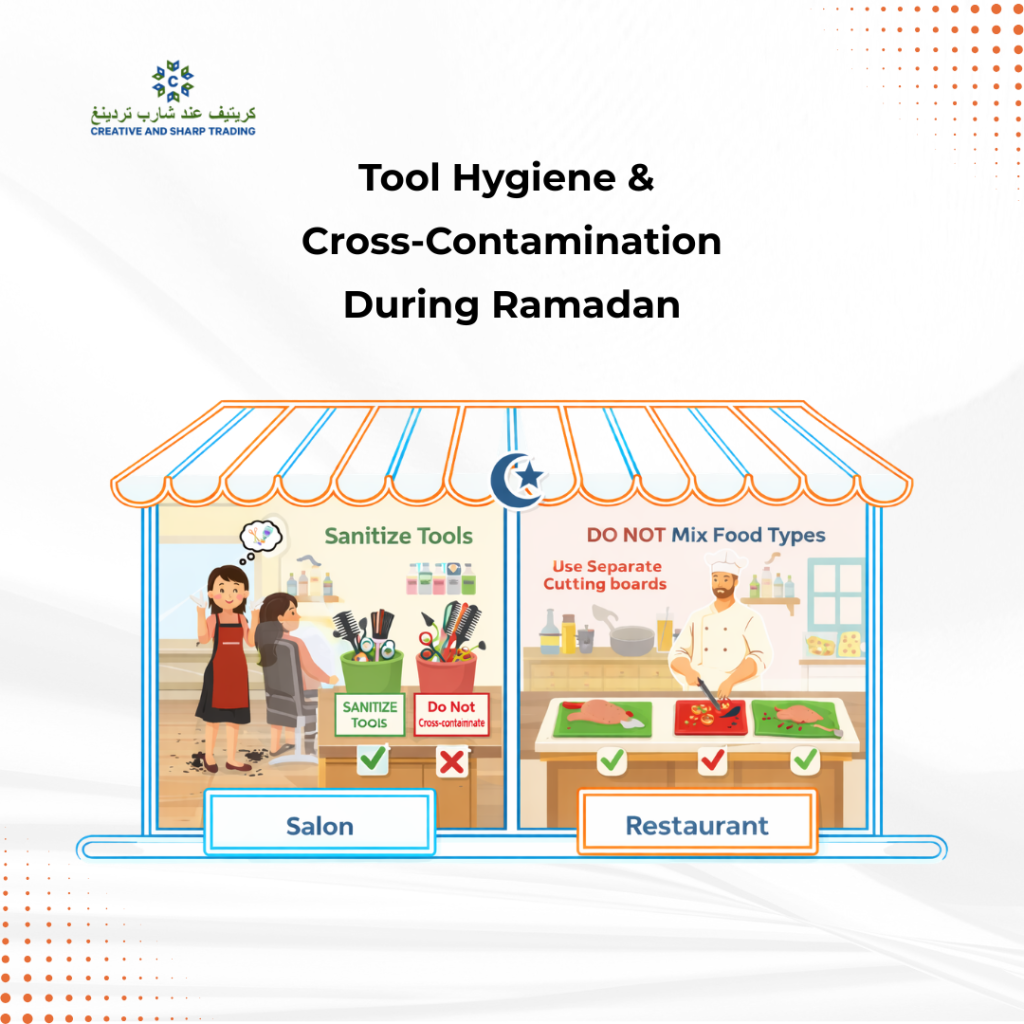
A Professional Advisory for Qatar’s Food & Grooming Industries
During the holy month of Ramadan in Qatar, operational intensity across food establishments and grooming businesses increases significantly. Extended working hours, higher customer volumes, and accelerated service cycles elevate one critical risk: cross-contamination.
For restaurants, catering companies, hotels, barbershops, and salons, hygiene is not only a regulatory obligation — it is a business continuity priority. During Ramadan, any lapse in sanitation or tool maintenance can have amplified consequences, including reputational damage, customer loss, and regulatory scrutiny..
Ramadan Operations: Why Risk Levels Increase?
Ramadan brings structural changes to business operations:
- Surge in food preparation for Iftar and Suhoor
- Increased catering and bulk production
- Peak grooming demand ahead of Eid
- Staff fatigue due to fasting
- Accelerated turnaround between clients or service cycles
Under these conditions, tool hygiene becomes more vulnerable to shortcuts, improper sanitization, and excessive tool sharing.
Food Industry: Managing Cross-Contamination in High-Volume Kitchens
Commercial kitchens across Qatar operate at maximum capacity during Ramadan. The probability of contamination increases when workflow speeds up and tool segregation is not strictly enforced.
Primary Risk Factors
1. Inadequate Tool Segregation
Using the same knife for raw poultry and ready-to-eat food without validated sanitization protocols significantly increases bacterial transmission risks.
2. Dull or Damaged Blades
Dull knives:
- Create uneven food surfaces that retain contaminants
- Require increased force and handling
- Are harder to clean due to microscopic edge damage
- Increase injury risk, leading to potential biological contamination
3. Insufficient Between-Shift Sanitation
Peak Iftar preparation often results in tools being wiped instead of properly sanitized and air-dried, creating microbial persistence risks.
Recommended Controls for Food Establishments
- Implement strict color-coded knife systems
- Establish documented sanitation intervals during peak hours
- Conduct scheduled professional sharpening to maintain smooth blade surfaces
- Perform supervisory hygiene audits during Ramadan
- Provide refresher cross-contamination training for temporary staff
Maintaining blade integrity is directly linked to food safety performance.
Grooming Industry: Hygiene Management in Peak Appointment Cycles
Barbershops and salons in Qatar experience substantial demand in the final ten days of Ramadan. Increased appointment density reduces time between clients, increasing cross-infection risk.
High-Exposure Tools
- Hair cutting scissors
- Clippers and trimmers
- Straight razors
- Cuticle tools
- Shaving blades
Operational Risk from Dull Tools
Dull grooming instruments:
- Cause micro-abrasions on skin
- Prolong contact time
- Retain biological residue
- Reduce effectiveness of surface disinfection
In high-turnover environments, compromised tool condition significantly elevates hygiene liability.
Professional Hygiene Standards for Grooming Businesses
- Sterilize tools after each client using approved disinfectants
- Maintain multiple tool sets to allow proper sterilization cycles
- Conduct regular blade sharpening to ensure smooth cutting surfaces
- Replace corroded or structurally compromised instruments
- Document hygiene procedures to ensure compliance consistency
Clients preparing for Eid expect elevated service quality — and uncompromised safety standards.
The Strategic Link Between Tool Maintenance & Hygiene
Hygiene protocols often focus exclusively on disinfectants. However, tool condition is equally critical.
A professionally sharpened blade:
- Has a refined surface that limits microbial retention
- Requires less operational force
- Reduces accidental injury
- Improves efficiency during peak periods
- Supports easier and more effective cleaning
Sharpness is not merely a performance factor — it is a hygiene control measure.
Business Risk & Reputation During Ramadan
In Qatar’s competitive service sectors, hygiene failures carry immediate consequences:
- Negative digital reviews
- Regulatory penalties
- Customer trust erosion
- Long-term brand damage
Preventive tool maintenance and strict sanitation procedures reduce both operational and reputational risk exposure.
How CNS Trading Supports Professional Standards?
CNS Trading delivers:
- Precision sharpening services for professional-grade tools
- Premium salon hygiene and grooming products
- Reliable supply chain distribution across Qatar
- Efficient turnaround to minimize operational downtime
- Consistent quality assurance
Our commitment is to help Qatar’s food and grooming professionals maintain the highest hygiene standards throughout Ramadan and beyond.
Conclusion
Ramadan represents discipline, accountability, and excellence.
Businesses that uphold superior hygiene practices demonstrate operational maturity and professional integrity.
Ensure every tool is maintained.
Ensure every blade performs optimally.
Ensure every client interaction reflects safety and trust.