
Industrial & Healthcare Perspective
In industries where precision, hygiene, and operational efficiency matter, tool performance is critical. From industrial cutting tools and salon equipment to delicate medical instruments used in healthcare environments, seasonal climate conditions can significantly impact tool lifespan and performance.
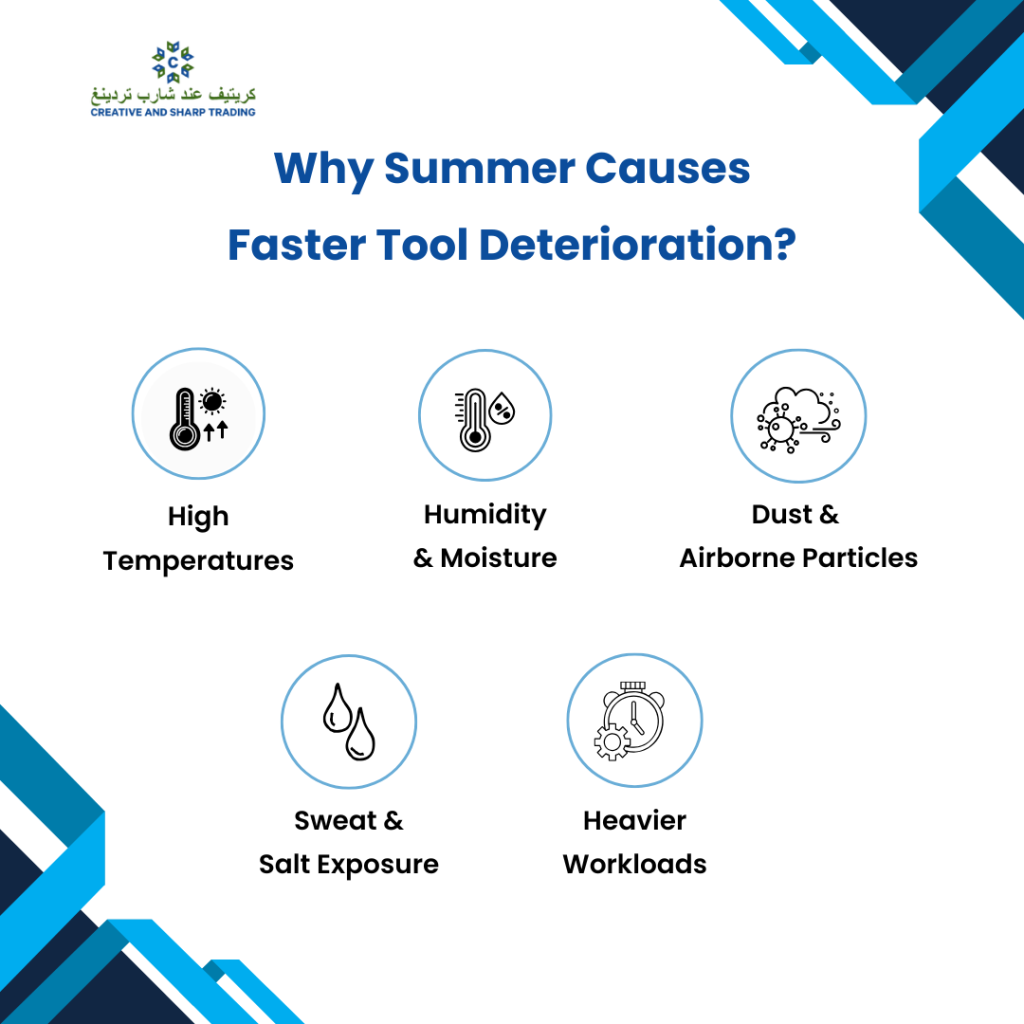
Summer, especially in regions with extreme heat and humidity, creates the perfect environment for accelerated tool deterioration. Many organizations underestimate how rising temperatures, moisture exposure, dust accumulation, and improper storage conditions silently damage valuable equipment over time.
At CNS Trading, we work closely with professionals across industrial, healthcare, beauty, and technical sectors in Qatar, helping businesses maintain peak tool performance through expert sharpening and maintenance solutions.
Understanding Summer-Related Tool Damage
Summer deterioration is not caused by a single factor. It is usually the result of multiple environmental stressors working together.
These include:
- High humidity
- Increased oxidation
- Heat expansion
- Moisture retention
- Dust and airborne particles
- Increased equipment usage
- Improper storage conditions
- Chemical exposure from cooling or cleaning agents
While these conditions may seem minor initially, over time they reduce tool efficiency, compromise safety, and increase operational costs.
1. Humidity Accelerates Corrosion
One of the biggest threats during summer is humidity.
When metal tools are exposed to moisture-rich air, oxidation occurs faster. This leads to:
- Rust formation
- Surface corrosion
- Weakening of metal edges
- Reduced sharpness
- Increased friction during use
In healthcare settings, corrosion on delicate surgical instruments can directly affect precision and sterilization reliability. Even microscopic corrosion can compromise instrument performance.
Industrial tools face similar risks, especially cutting blades, precision equipment, and mechanical components used in manufacturing or maintenance operations.
2. Heat Weakens Tool Integrity
Extreme summer temperatures can affect metal composition over time.
Continuous exposure to heat may cause:
- Expansion and contraction of metal
- Blade warping
- Reduced hardness
- Edge instability
- Handle loosening
- Joint misalignment
For precision instruments, even minimal structural changes can impact performance accuracy.
Healthcare instruments require extremely fine tolerances. A slightly misaligned instrument may affect procedural precision, while in industrial environments, weakened tools may lead to inaccurate cuts, equipment stress, or production inefficiencies.
3. Increased Moisture Retention After Cleaning
Many tools are cleaned, disinfected, or sterilized frequently during daily operations.
During summer, moisture evaporates unevenly in humid environments, especially when tools are stored immediately after washing. Residual moisture trapped inside joints, hinges, or edges increases the likelihood of:
- Internal corrosion
- Bacterial growth
- Surface staining
- Material degradation
This is particularly critical in healthcare environments where hygiene standards are non-negotiable.
Medical instruments require complete drying before storage to maintain both safety and longevity.
4. Higher Usage During Summer Operations
Many industries experience heavier operational demand during summer periods.
This means tools are often:
- Used for longer hours
- Cleaned more frequently
- Sharpened less often
- Exposed to harsher environments
- Stored improperly between rapid-use cycles
Overworked tools lose efficiency faster.
Dull tools not only reduce productivity but also increase safety risks because operators tend to apply more pressure during use. In healthcare, reduced sharpness may affect procedural precision. In industrial settings, it can increase workplace injury risks and equipment strain.
5. Dust and Airborne Particles Increase Wear
Summer environments often contain higher levels of dust and airborne contaminants.
Fine particles settle on tool surfaces and mechanical joints, causing:
- Abrasive wear
- Surface scratches
- Reduced lubrication efficiency
- Blocked moving components
- Faster blade dulling
In healthcare environments, contamination risks are even more serious because particle buildup can interfere with sterilization standards and equipment reliability.
Regular cleaning and protective storage become essential during hot seasons.
6. Improper Storage Conditions Make Damage Worse
Many businesses unknowingly shorten tool lifespan through poor summer storage practices.
Common mistakes include:
- Leaving tools in non-climate-controlled areas
- Storing damp equipment
- Exposure to direct sunlight
- Poor ventilation
- Stacking instruments improperly
- Using non-protective storage trays
Heat combined with humidity creates a highly damaging environment for metal tools and precision equipment.
Healthcare facilities must also ensure sterile instruments remain protected from environmental exposure before use.
How Summer Deterioration Impacts Businesses?
Ignoring seasonal tool maintenance creates long-term operational consequences.
Industrial Impact
- Reduced production efficiency
- Increased downtime
- More frequent replacements
- Higher maintenance costs
- Reduced cutting precision
- Equipment failures
Healthcare Impact
- Compromised instrument precision
- Sterilization concerns
- Increased contamination risk
- Reduced procedural efficiency
- Higher replacement expenses
- Compliance and safety concerns
For organizations relying on precision tools daily, proactive maintenance is far more cost-effective than reactive replacement.
Best Practices to Prevent Summer Tool Deterioration
Maintain Regular Sharpening Schedules
Sharp tools perform efficiently and experience less operational stress.
Routine professional sharpening:
- Restores cutting accuracy
- Reduces friction
- Prevents excessive force during use
- Extends tool lifespan
Store Tools in Climate-Controlled Environments
Temperature and humidity control significantly reduce corrosion risks.
Recommended practices:
- Use dry storage areas
- Maintain ventilation
- Avoid direct heat exposure
- Use protective cases or covers
Ensure Complete Drying After Cleaning
Never store tools while moisture remains on the surface or inside joints.
Use:
- Dry lint-free cloths
- Air drying systems
- Compressed air for joints and hinges
- Proper sterilization drying procedures
Conduct Preventive Maintenance Inspections
Routine inspections help identify:
- Early corrosion
- Edge wear
- Misalignment
- Structural damage
- Surface degradation
Early intervention prevents major equipment failure later.
Use Professional Tool Maintenance Services
Professional servicing ensures:
- Precision sharpening
- Proper edge restoration
- Instrument-safe maintenance
- Longer equipment lifespan
- Consistent operational performance
This is especially important for delicate healthcare instruments where precision cannot be compromised.
Final Thoughts
Summer conditions create hidden stress on industrial and healthcare tools. Heat, humidity, moisture, and increased operational demand gradually reduce tool performance, reliability, and lifespan.
Organizations that prioritize preventive maintenance, professional sharpening, proper storage, and routine inspections can significantly reduce operational costs while maintaining high performance and safety standards. At CNS Trading, we support businesses across Qatar with professional sharpening solutions and premium maintenance support designed to keep every blade and precision instrument operating at its best — even in the harshest summer conditions