
Whether you’re a professional chef running a busy kitchen or a passionate home cook, your knives and kitchen tools are the backbone of every dish. A sharp knife not only delivers precision and efficiency but also ensures safety during food prep. But here’s something many overlook: how you store your tools directly affects how long they stay sharp.
In this blog, we’ll cover the best practices to store your culinary tools properly — so you preserve their edges, extend their life, and get the most out of every slice, dice, and chop.
Why Proper Storage Matters?
Storing your knives and tools carelessly — in a drawer, next to hard metals, or loosely packed — leads to:
- Faster dulling of blades
- Chipped edges
- Rusting or corrosion
- Higher risk of accidents
Good storage protects your tools and ensures that sharpening services are needed less frequently, saving you time and money.
1. Use a Knife Block or Magnetic Strip
Knife Block:
A wooden or bamboo knife block keeps knives upright and separate from one another. It prevents blades from rubbing against other tools and is ideal for countertop storage.
Tip: Clean the slots regularly to avoid moisture build-up, which can cause rust.
Magnetic Strip:
Magnetic strips are mounted on the wall and hold knives securely. They’re great for saving space and keeping blades visible and accessible.
Bonus: Unlike drawers, magnetic strips don’t trap moisture — a major win for edge retention.
2. Avoid Tossing Knives in a Drawer
This is the most common mistake. Tools knocking against each other in a drawer leads to:
- Edge damage
- Unsafe handling
- Contaminated surfaces
If you must use a drawer, add:
- Knife guards or sheaths
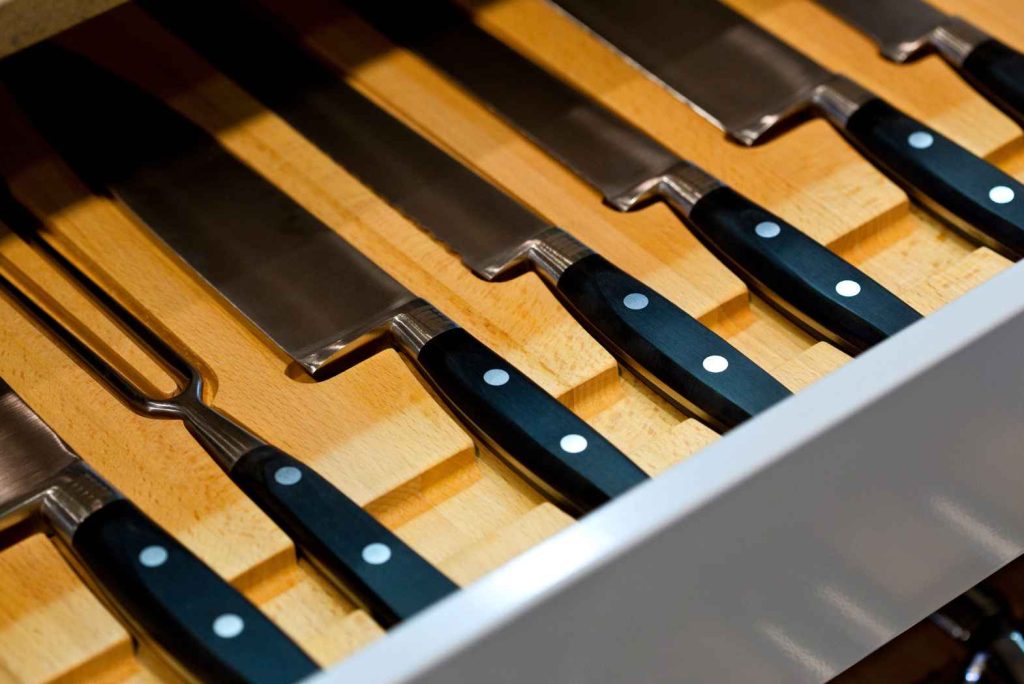
- In-drawer knife trays with individual slots
3. Dry Tools Thoroughly Before Storing
Even stainless steel knives are vulnerable to rust if stored while wet. Always:
- Wipe your tools with a clean, dry towel immediately after washing
- Let air-dry completely before placing them into blocks or trays
Remember: Moisture is the enemy of sharpness.
4. Clean Storage Areas Regularly
Dust, food particles, or oil residue can build up in storage spaces and contribute to corrosion. Schedule a regular routine to:
- Wipe down magnetic strips
- Clean inside knife blocks
- Sanitize tool drawers
This keeps both your tools and storage safe and hygienic.
5. Invest in Blade Covers for Travel or Catering
If you transport your knives for events or catering gigs, protect them with:
- Blade guards
- Knife rolls
- Tool cases with padding
They’re essential for keeping knives sharp and avoiding damage in transit.
Bonus: Rotate Tools to Extend Lifespan
Don’t overuse a single knife or tool. Rotate between similar items (for example, chef’s knife, santoku, utility knife) so no single blade gets overworked. This small habit significantly slows edge wear.
Final Thoughts
Proper storage is just as important as regular sharpening. Think of it as daily maintenance that prevents damage and extends the life of your culinary investments. Whether you’re prepping meals at home or working 12-hour shifts in a professional kitchen, smart storage means sharper tools and safer hands.