
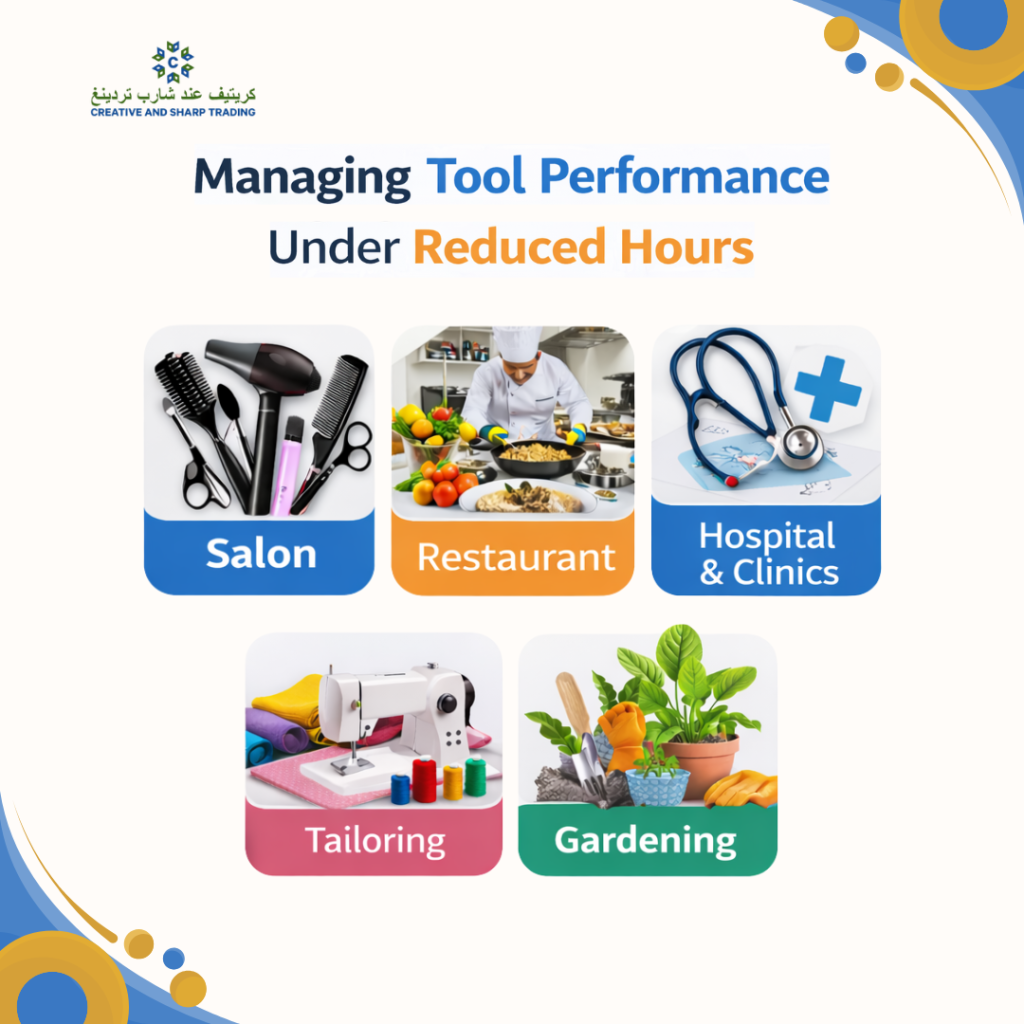
Across industries, tools are the backbone of daily operations. From precision scissors in salons to cutting tools in workshops, performance consistency directly affects productivity, service quality, and business profitability. However, many businesses now operate under reduced hours, flexible shifts, or intermittent workloads, making tool performance management more complex.
When tools are used for shorter periods but expected to deliver the same output quality, maintenance routines, storage practices, and operational planning must adapt accordingly. Without proper management, reduced usage hours can ironically lead to higher wear, unexpected failures, and declining efficiency.
This guide explores how organizations across different sectors—including Beauty & Grooming, Hospitality & Culinary, Healthcare & Veterinary, Tailoring & Fashion, Gardening & Floristry, and Woodwork operations—can maintain optimal tool performance even when operational hours fluctuate.
Understanding the Impact of Reduced Operating Hours
Reduced working hours may seem like they would extend tool lifespan. In reality, tools often degrade faster when they are used irregularly without structured maintenance.
Several factors contribute to this challenge:
- Inconsistent sharpening or calibration cycles
- Improper storage between shifts
- Humidity and environmental exposure
- Delayed cleaning routines
- Unplanned workload spikes
When tools sit idle for extended periods and are suddenly pushed into heavy use, performance degradation becomes more likely. This is why organizations must focus on maintenance consistency rather than usage duration.
1. Beauty & Grooming: Maintaining Precision Tools
Beauty professionals rely on high-precision hand tools such as scissors, razors, manual clippers, tweezers, and styling combs. Even minor performance issues can affect service quality and customer satisfaction.
Common Challenges
When salons operate with shorter working hours or appointment-based schedules:
- Tools may remain unused for long intervals
- Moisture accumulation can affect metal surfaces
- Residue from hair products may harden on tool surfaces
Best Practices
Routine Cleaning After Each Use
Hair residue, styling products, and skin oils can accumulate quickly. Tools should be cleaned immediately after use, even during shorter workdays.
Lubrication and Blade Maintenance
Scissors and cutting tools should be lubricated regularly to prevent stiffness and maintain cutting precision.
Controlled Storage
Tools should be stored in dry, ventilated cases to prevent rust or microbial contamination.
Weekly Performance Checks
Even with reduced hours, weekly inspection ensures tools maintain cutting accuracy and smooth operation.
2. Hospitality & Culinary: Kitchen Tools Under Intermittent Use
Professional kitchens rely heavily on sharp, durable, and hygienic hand tools. Knives, peelers, graters, and cutting boards must perform reliably even when restaurant operations fluctuate.
Operational Risks
Reduced hours can create several issues:
- Blade dullness due to improper storage
- Food residue buildup on tools
- Hygiene risks if tools remain uncleaned between shifts
Performance Management Strategies
Scheduled Sharpening Cycles
Professional knives should follow a sharpening schedule rather than waiting for performance decline.
Deep Cleaning Between Operating Days
If kitchens operate fewer hours, tools must be thoroughly cleaned and sanitized before closing.
Dry Storage
Proper storage prevents corrosion and extends the lifespan of metal kitchen tools.
Protective Sheaths for Blades
Knife guards or protective sleeves help maintain blade sharpness and reduce accidental damage.
3. Healthcare & Veterinary: Precision and Reliability Are Critical
In healthcare environments, tools are not just operational assets—they directly affect patient safety and clinical outcomes.
Medical and veterinary practices use a wide range of manual instruments, including:
- Surgical instruments
- Diagnostic hand tools
- Grooming tools for animals
- Dental instruments
Risks Under Reduced Hours
Healthcare clinics operating on limited schedules may encounter:
- Sterilization process disruptions
- Instrument contamination risks
- Improper storage of sterilized tools
Effective Management Practices
Strict Sterilization Protocols
Even when tools are used less frequently, sterilization routines must remain unchanged.
Protective Packaging
Sterilized instruments should remain sealed until use to maintain hygiene.
Routine Inspection
Manual inspection ensures instruments remain precise and ready for safe use.
Proper Storage Systems
Instrument trays and sterile pouches help preserve tool integrity.
4. Tailoring & Fashion: Preserving Cutting Accuracy
Tailoring tools require precision and consistency to maintain fabric quality and garment accuracy.
Essential tools include:
- Fabric scissors
- Rotary cutters
- Measuring tapes
- Tailor’s chalk
Performance Risks
Reduced hours may lead to:
- Blade dullness
- Dust accumulation
- Misalignment of cutting edges
Performance Optimization
Blade Maintenance
Fabric scissors must be used exclusively for textiles and sharpened regularly.
Dust Protection
Fabric fibers can accumulate on cutting tools and reduce efficiency.
Proper Tool Storage
Scissors and cutters should be stored in protective cases to avoid edge damage.
Pre-Work Inspection
Checking cutting tools before starting work ensures consistent performance.
5. Gardening & Floristry: Protecting Outdoor Tools
Gardening and floristry tools often face environmental exposure, making maintenance particularly important during reduced working hours.
Common tools include:
- Pruning shears
- Garden scissors
- Hand trowels
- Floral cutters
Key Challenges
Outdoor tools are vulnerable to:
- Rust formation
- Blade dullness
- Moisture damage
Preventive Strategies
Immediate Cleaning
Plant sap and soil residues should be removed immediately after use.
Rust Prevention
Applying light oil on metal surfaces helps prevent corrosion.
Dry Storage
Tools must be stored indoors in well-ventilated areas.
Regular Inspection
Tools should be inspected at the beginning of each working week.
6. Woodwork Tools: Maintaining Cutting Precision
Woodworking environments rely heavily on manual cutting and shaping tools, including:
- Hand saws
- Chisels
- Hand planes
- Carving tools
Even when workshops operate fewer hours, these tools must remain sharp and properly maintained.
Performance Challenges
- Blade dullness
- Rust formation during idle periods
- Reduced cutting precision
Best Practices
Regular Sharpening
Cutting tools must be sharpened consistently to maintain clean and accurate cuts.
Protective Storage
Woodworking tools should be stored in dry cabinets or tool rolls.
Edge Protection
Blade guards prevent accidental damage when tools are not in use.
Routine Inspection
Checking tools before each work session ensures safe and efficient operation.
The Importance of Standardized Maintenance Routines
Regardless of industry, effective tool performance management depends on standardized maintenance routines.
Organizations should establish:
- Inspection checklists
- Cleaning protocols
- Sharpening schedules
- Usage logs
These processes ensure tools remain reliable even when working hours fluctuate.
Leveraging Smart Tool Management Practices
Modern businesses increasingly adopt maintenance tracking systems to manage tool performance.
These systems help organizations:
- Track maintenance schedules
- Monitor tool condition
- Prevent performance decline
- Improve operational planning
Even small businesses can benefit from simple maintenance logs or checklists.
Building a Tool Performance Culture
Maintaining tools is not only a technical process—it is also a workplace culture.
Organizations that prioritize tool care typically experience:
- Higher productivity
- Improved service quality
- Lower operational costs
- Longer tool lifespans
Employees should be trained to treat tools as critical operational assets rather than disposable equipment.
Conclusion: Performance Depends on Preparation
Reduced working hours do not reduce the need for consistent maintenance and performance management. Whether in salons, kitchens, clinics, tailoring studios, gardens, or workshops, tools must remain clean, sharp, and ready for use.
Organizations that implement structured maintenance routines, proper storage practices, and regular performance checks can ensure their tools continue delivering precision, safety, and efficiency—regardless of operational schedules.
Ultimately, effective tool management is not about how long tools are used.
It is about how well they are maintained between uses.