
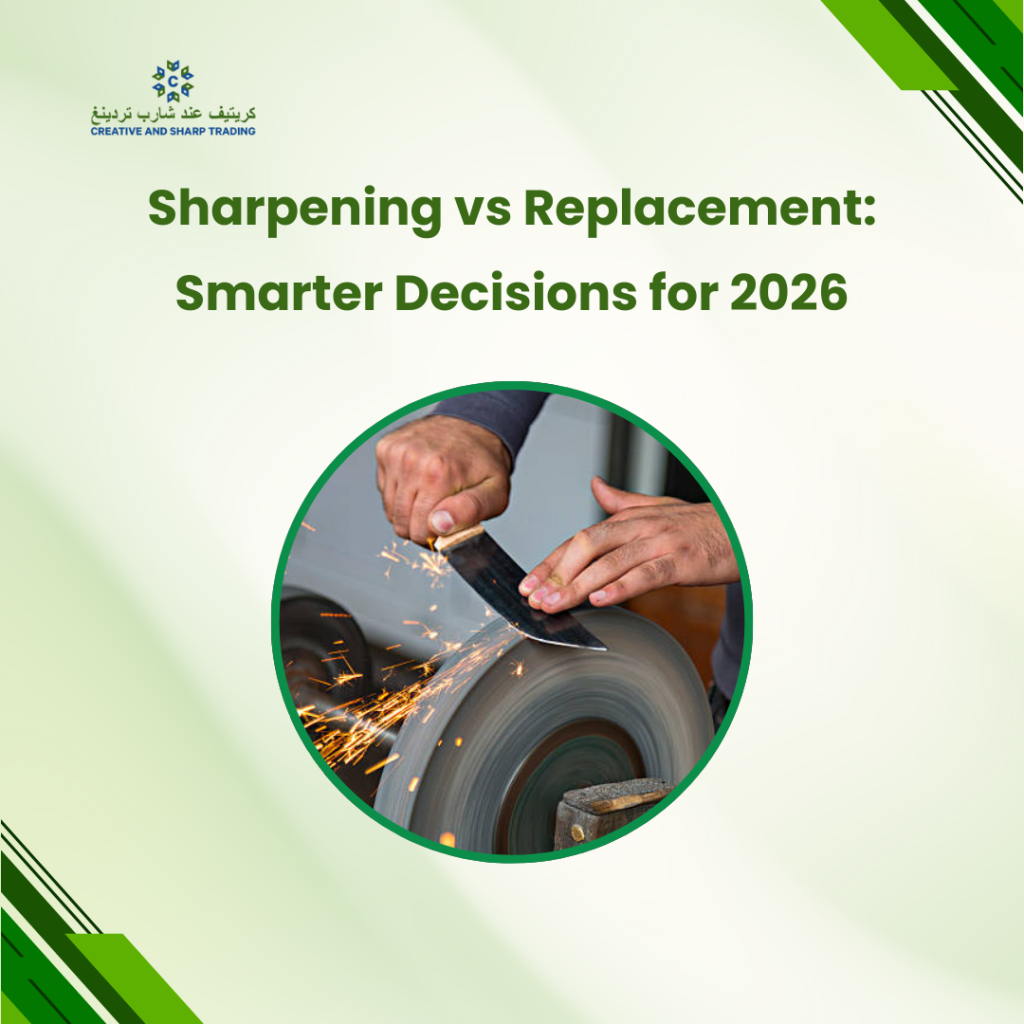
In modern industries, the question of whether to sharpen or replace tools is no longer just a maintenance concern—it’s a critical operational and financial decision. As companies push for higher productivity, better precision, and sustainability in 2026, understanding when to sharpen and when to replace tools can significantly impact cost efficiency, operational continuity, and safety.
Understanding Tool Degradation
All cutting, drilling, and machining tools experience wear over time. Wear affects not only performance but also the quality of the output and operational safety. Dull or damaged tools lead to:
- Increased force requirements and energy consumption
- Higher risk of product defects or inaccuracies
- Faster wear of machinery and components
- Greater operational downtime
Accurately assessing tool wear is crucial to determine whether sharpening or replacement is the better option. Modern monitoring systems and predictive maintenance technologies now allow businesses to track tool performance in real time, identifying efficiency losses before they become critical.
Sharpening: Cost-Effective Precision Restoration
Sharpening remains one of the most sustainable and economical solutions when tools have lost their edge but retain structural integrity. Key advantages of sharpening include:
- Restored Performance: Advanced sharpening techniques can bring tools back to near-original precision.
- Extended Tool Life: Properly sharpened tools can undergo multiple cycles of use without compromising quality.
- Cost Savings: Sharpening is significantly cheaper than purchasing a new tool and reduces the need for frequent replacements.
- Environmental Benefits: Sharpening reduces material waste and energy consumption associated with manufacturing new tools.
For businesses in 2026, leveraging precision sharpening technology ensures operational efficiency while aligning with sustainability goals. A regular sharpening schedule, guided by performance metrics, maximizes both productivity and ROI.
Replacement: Strategic Investment in Performance
Replacement becomes the more effective choice under specific conditions:
- Structural Damage: Tools with cracks, chips, warping, or severe wear cannot be reliably restored through sharpening.
- Cost-Benefit Considerations: When sharpening costs approach the price of a new tool, replacement is the smarter financial choice.
- Technological Upgrades: New tools often feature advanced materials, coatings, or designs that improve durability, reduce friction, and enhance cutting efficiency—benefits unattainable through sharpening.
By strategically replacing tools at the optimal point, businesses can prevent costly downtime, ensure consistent product quality, and maintain safety standards.
Data-Driven Decision Making
The adoption of Industry 4.0 technologies in 2026 is transforming tool management:
- IoT-Enabled Monitoring: Sensors track vibration, temperature, and tool wear in real time.
- AI-Driven Predictive Analysis: Algorithms forecast tool lifespan and alert operators when sharpening or replacement is due.
- Operational Optimization: Data allows companies to balance tool utilization, maintenance schedules, and production demands.
This approach not only ensures maximum efficiency but also minimizes unnecessary costs and waste.
Balancing Sustainability and Productivity
In today’s environmentally conscious market, the choice between sharpening and replacement also has sustainability implications:
- Sharpening reduces raw material consumption, minimizes industrial waste, and supports circular economy practices.
- Timely replacement prevents inefficiencies, reduces scrap rates, and avoids overuse of damaged tools.
A balanced, data-driven approach ensures that businesses achieve operational excellence without compromising their sustainability commitments.
Conclusion
In 2026, smarter tool management requires a combination of experience, technology, and strategic foresight. Understanding the nuances of tool wear, cost considerations, and operational impact enables businesses to make informed decisions about sharpening versus replacement. Companies that adopt predictive maintenance, invest in advanced tools, and maintain a robust sharpening strategy will achieve higher productivity, lower costs, and sustainable operations—staying ahead in a competitive industrial landscape.